


No Bars at Home? A 6,000 Sq Ft Cell Signal Booster for $85.49 — and the Landline Backup Plan

The First Cell Phone Cost $3,995 and You Still Had to Find a Hill
The Motorola DynaTAC 8000X went on sale in 1983 at $3,995 — call it about $12,000 in today's money. It weighed nearly two pounds, took roughly ten hours to charge, and gave you about thirty minutes of talk time in return. And for all of that, it still did the one thing every phone since has done: it worked beautifully in some places and not at all in others, and the only fix anyone knew was to walk toward a window.
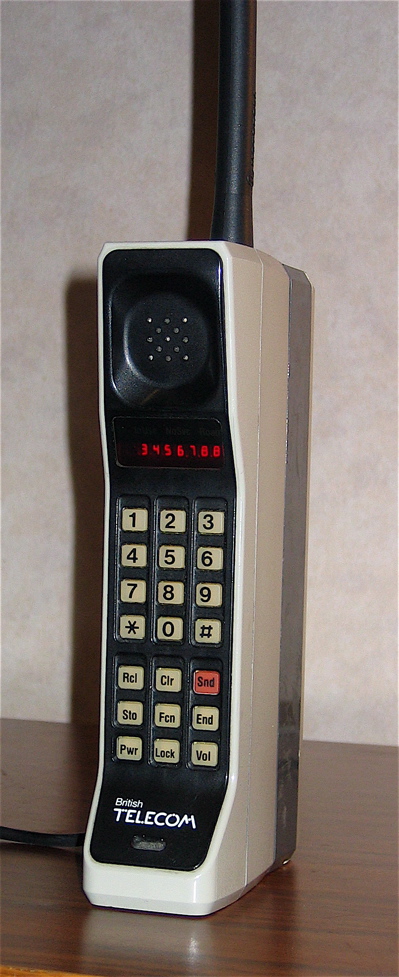
Forty years and five generations of network later, an astonishing number of people still walk to a window. The reason usually is not your carrier and it definitely is not your phone. It is your house.
Why your kitchen has no bars
Cellular signal is radio, and radio gets eaten by buildings. The worst offenders are exactly the materials modern construction likes best:
- Low-E window coating. The metallic film that keeps Arizona heat out is very good at keeping radio waves out too. A house with new energy-efficient glass can lose more signal at the windows than at the walls.
- Stucco over wire lath. Extremely common across the Southwest, and functionally a Faraday cage wrapped around your living room.
- Metal roofing, foil-faced sheathing, concrete and tile. All heavy attenuators.
- Distance and terrain. If the nearest tower is behind a ridge, no amount of indoor equipment fixes the fundamentals — but a booster with an outdoor antenna gets to work with the signal on your roof instead of the signal in your hallway, and that is usually a different world.
Our multi-room home cell phone signal booster, rated up to 6,000 square feet, is $85.49, and we have 2 in stock. The architecture of every booster like this is the same three pieces: an outside antenna that captures whatever signal exists at the highest point of the building, an amplifier in the middle, and an inside antenna that rebroadcasts it into the space that had none.
Two things to get right before you buy
Separation between antennas. The single most common installation failure is putting the outdoor and indoor antennas too close together, which causes oscillation — the amplifier hears itself, and the unit shuts down to protect the network. Vertical separation is your friend: outside antenna on the roof or a gable end, inside antenna on the lowest floor you need covered.
Registration. In the United States, the FCC requires consumer signal boosters to be registered with your wireless carrier before use. The carriers do this for free through a web form, it takes a few minutes, and it exists so that the network can identify your unit if it ever misbehaves. Do it. It is a rule people skip and should not.
One expectation to set honestly: a booster amplifies signal that already exists. If you genuinely have zero signal outdoors at roof height, no booster can manufacture bars — that is a WiFi-calling situation instead.
The unglamorous backup that still works
Here is the thing nobody says out loud: in a real outage, the humble landline is often the last thing standing. Cell sites have backup batteries measured in hours. Copper phone lines are powered from the central office and have historically survived power failures that took everything else down.
Which is why the old gear is still worth having. A Phonex PX-441 wireless jack system at $70.39 solves a genuinely annoying problem: it carries a phone line across your existing house wiring, so you can put a phone or a modem in a room that has an outlet but no phone jack. No drilling, no new cable through a stucco wall.
For handsets, an AT&T EL51303 DECT 6.0 3-handset cordless phone is $44.99 — one line, three handsets, speakerphone, so a single jack covers a whole house. And for landlords, property managers, offices or anyone furnishing multiple units at once, we have a wholesale lot of 24 cordless handsets with 26 bases — a mixed lot of AT&T, VTech, Panasonic and Motorola DECT 6.0 gear with batteries included — at $129.99. That works out to a little over five dollars per handset, which is a price that only exists in liquidation.
The order of operations
Step one, walk outside and check your bars at the far corner of the yard. If they are good outdoors and bad indoors, your problem is the building and a booster will fix it. If they are bad everywhere, skip the booster, turn on WiFi calling, and keep a landline for the day the power goes out.
🛒 Buy the 6,000 sq ft home cell phone signal booster — $85.49 (2 in stock)
shipping fee · ships in 1 business day · 30-day returns · see all electronics


